Tag Archives: LLY

Eli Lilly’s “Weight-Loss Wonder Drug” Combination Shows Remarkable Efficacy, Accelerating Expansion into Immunology

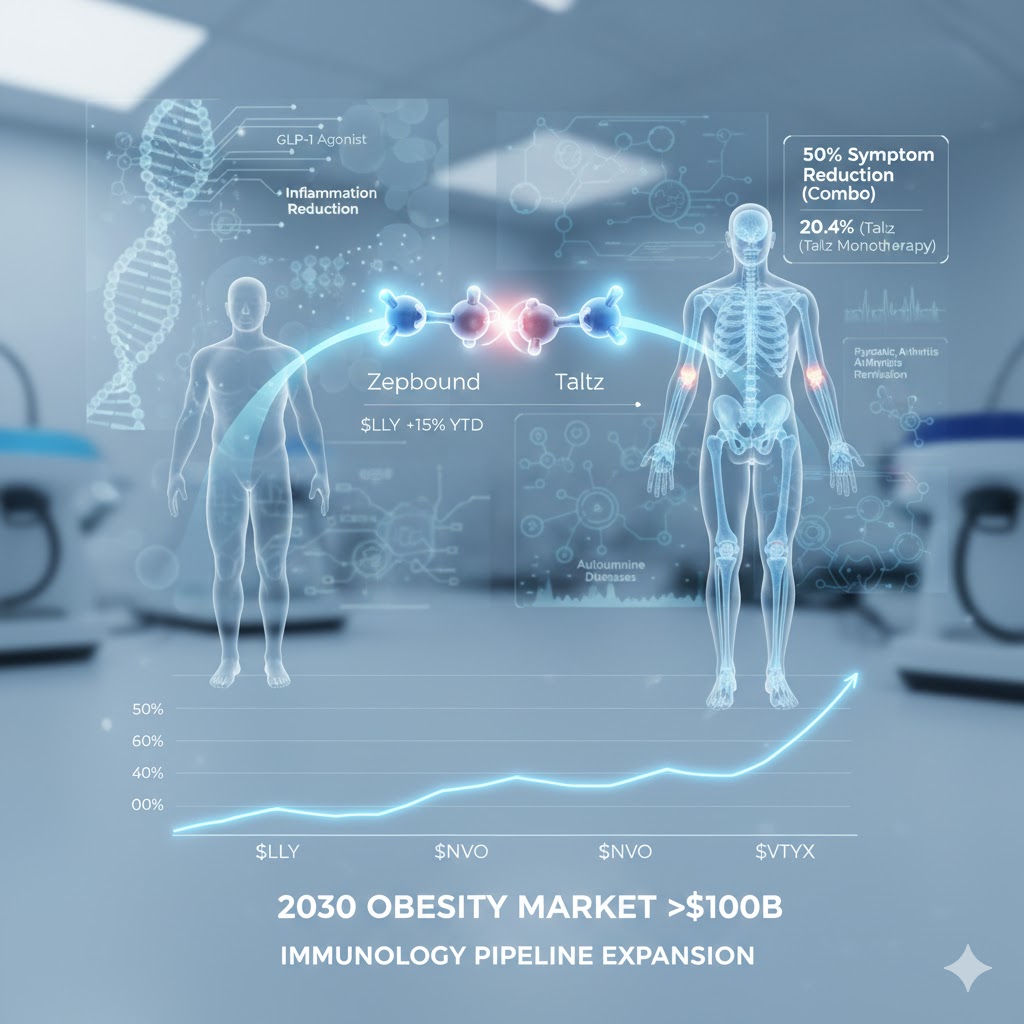
A latest study from Eli Lilly (LLY) reveals that combining its popular weight-loss injection, Zepbound, with the arthritis drug Taltz, is significantly more effective at relieving joint pain and swelling than using either drug alone. This Lilly-backed research opens a new frontier for the application of GLP-1 medications in inflammatory and autoimmune diseases.

Key Study Findings

The study enrolled 271 patients suffering from both obesity and active psoriatic arthritis. Results showed that the combination therapy outperformed Taltz monotherapy in helping patients lose weight and manage arthritis symptoms, meeting the trial’s primary objectives. According to a statement from Eli Lilly, approximately one-third of patients on the combination therapy saw their psoriatic arthritis symptoms reduced by at least half, compared to 20.4% of those using only Taltz.

GLP-1 receptor agonists like Zepbound have already been proven to lower inflammation levels in patients with diabetes and obesity. While observational studies and case reports have previously linked them to improvements in autoimmune conditions such as psoriasis, this study provides the first clinical validation of that theory.
Broadening the Scope of Treatment

With the obesity drug market projected to reach $100 billion by 2030, part of Zepbound’s appeal lies in its potential to address other health complications, including sleep apnea and heart failure. Eli Lilly has integrated this cross-disciplinary approach into the development of its next-generation weight-loss drug, retatrutide, which is currently being studied for conditions such as knee osteoarthritis and chronic kidney disease.

Eli Lilly stated it plans to discuss the study results with regulatory agencies, a move that could lead to expanded label indications or modified clinical treatment recommendations. In the United States, approximately 65% of adults with psoriatic arthritis are also obese, meaning the majority of these patients already qualify for Zepbound treatment.

Strategic Growth and Acquisitions

The Indianapolis-based pharmaceutical giant is also exploring the efficacy of the Zepbound-Taltz combination for plaque psoriasis and inflammatory bowel disease. Results for the plaque psoriasis trial are expected to be released in the first half of this year.

Taltz is one of several Eli Lilly drugs treating inflammatory conditions, with annual sales exceeding $3 billion; however, its key patent protections are set to expire in the coming years. This combination research is a core component of Lilly’s strategy to leverage its success in obesity to drive growth in other sectors like immunology.

Furthermore, the company is actively pursuing deals to bolster its pipeline. On Wednesday, Eli Lilly announced it would acquire Ventyx Biosciences ($VTYX.US) for up to $1.2 billion, gaining access to oral therapies for inflammatory diseases. This acquisition builds on earlier deals for companies like Morphic Therapeutic and Dice Therapeutics, which specialize in oral autoimmune treatments.
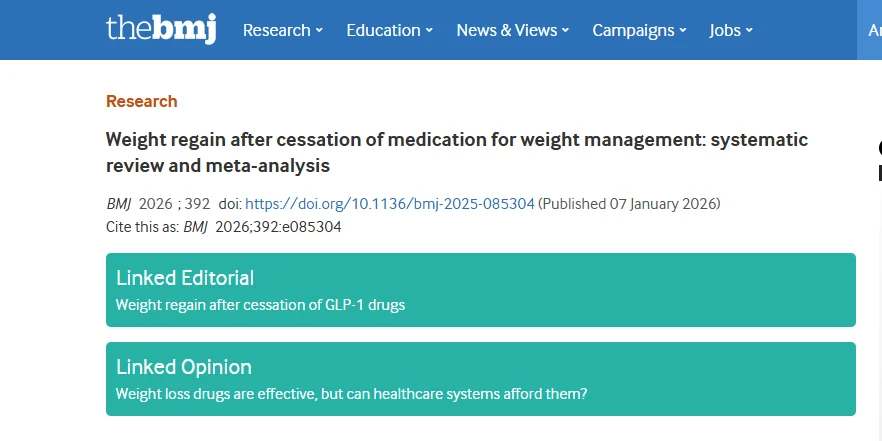
Meta-Analysis: Weight and Metabolic Benefits Revert to Baseline Within Two Years of Discontinuing Weight-Loss Drugs

A large-scale meta-analysis of previous studies has found that the benefits gained in weight loss and other health indicators by obese or overweight patients typically disappear within two years once they stop taking weight-loss medications.

Researchers analyzed data from 9,341 obese or overweight patients across 37 studies who had used 18 different weight-loss drugs. The results showed that after discontinuation, patients regained an average of nearly 1 pound (approx. 0.4 kg) per month. It is estimated that patients return to their pre-treatment weight levels within 1.7 years.

“Effect Zeroed Out” in Less Than Two Years

The study, published in The BMJ (British Medical Journal), indicates that as medication is stopped, cardiovascular risk factors improved by the treatment—including blood pressure and cholesterol levels—return to pre-treatment levels within an average of 1.4 years. Essentially, the clinical benefits are “zeroed out” in less than two years.

Among all subjects, approximately half had used GLP-1 receptor agonists. This included 1,776 individuals treated with the newest generation of more potent drugs: Semaglutide (marketed as Ozempic and Wegovy) by Novo Nordisk (NVO), and Tirzepatide (marketed as Mounjaro and Zepbound) by Eli Lilly (LLY).

A Structural Shift in Obesity Treatment

For a long time, weight loss achieved through diet and physical activity was considered the cornerstone of obesity treatment. However, the advent of GLP-1 drugs is driving a profound structural transformation. These new medications can help patients lose 15%–20% of their baseline weight within a year while simultaneously improving cardiometabolic markers such as blood sugar, blood pressure, and lipids. They have even shown positive signals in treating fatty liver disease, sleep apnea, and reducing the incidence of cardiovascular events.

The study found that weight regain was faster among patients using Semaglutide or Tirzepatide, with an average increase of approximately 1.8 pounds (0.8 kg) per month post-discontinuation.

However, Dimitrios Koutoukidis, the lead researcher from the University of Oxford and senior author of the study, noted: “Because Semaglutide and Tirzepatide produce much larger initial weight loss, these patients ultimately reach the point of returning to baseline weight at roughly the same time as users of other weight-loss drugs.” Specifically, the return to baseline for the new generation of GLP-1 drugs is about 1.5 years, compared to the 1.7-year average for all weight-loss drugs combined.

Biological Dependence and Long-term Management

The research also discovered that regardless of how much weight was initially lost, the monthly rate of regain after stopping medication was generally faster than that seen in weight management programs relying solely on behavioral interventions (such as diet and exercise). This suggests that pharmacological weight loss is physiologically more dependent on continuous intervention; once interrupted, the body’s strong compensatory mechanisms rapidly kick in.

As this was a retrospective analysis, researchers could not determine which specific patients were more likely to successfully maintain their weight after stopping the drugs. “Figuring out ‘who can maintain weight loss and who cannot’ is almost the Holy Grail of obesity research, but no one has a definitive answer yet,” Koutoukidis said.

Investment and Industry Perspective

From an industry and capital markets perspective, this research reinforces an increasingly clear conclusion: GLP-1 weight-loss drugs are “chronic long-term management tools” rather than one-time treatments. Rather than diminishing the revolutionary value of GLP-1 drugs, the study validates their product attributes of high user “stickiness” and sustained long-term demand from a long-term perspective.