Author Archives: admin

Cancer Drug Developer RVMD Surges Overnight on Rumors of Merck Acquisition Talks; Deal Could Reach $32 Billion

According to reports, Merck & Co. (MRK) is in discussions to acquire Revolution Medicines (RVMD), a biotechnology company focused on oncology. Sources familiar with the matter indicate that the transaction price being discussed is between $28 billion and $32 billion. If finalized, this would represent one of the largest deals in the pharmaceutical industry since Pfizer’s ($PFE.US) $43 billion acquisition of Seagen in late 2023.

Boosted by the news, Revolution Medicines saw its shares surge over 13% in Thursday’s U.S. overnight trading session as of press time.

Notably, reports on Wednesday suggested that AbbVie (ABBV) was in “advanced” talks to acquire Revolution Medicines, potentially valuing the pre-commercial company at over $20 billion. However, AbbVie subsequently responded that it was not in negotiations to acquire the firm.

Key Asset: Daraxonrasib (RMC-6236)

The cornerstone of Revolution Medicines’ portfolio is Daraxonrasib (RMC-6236), a cutting-edge, oral, direct-acting RAS(ON) multi-selective inhibitor. Designed to treat cancers driven by RAS gene mutations, the drug works by directly binding to the active state of the RAS protein. This blocks its interaction with downstream signaling proteins, thereby inhibiting the continuous activation of the RAS pathway and slowing the growth and proliferation of tumor cells.

Daraxonrasib targets common oncogenic RAS mutations, including G12X, G13X, and Q61X, which are critical drivers in major malignancies such as:

  • Pancreatic Ductal Adenocarcinoma (PDAC)
  • Non-Small Cell Lung Cancer (NSCLC)
  • Colorectal Cancer (CRC)

Currently, Daraxonrasib is being evaluated in four global Phase 3 clinical trials, including three focused on PDAC and one on locally advanced or metastatic RAS-mutant NSCLC. Top-line results from key studies are expected to be released this summer.

Clinical Milestones and Market Potential

In December of last year, Revolution Medicines announced the enrollment of the first patient in the RASolute 304 trial. This global, open-label, Phase 3 study evaluates the safety and efficacy of Daraxonrasib in patients with resectable PDAC who have completed surgery and chemotherapy. The trial aims to enroll approximately 500 patients to determine if the drug can improve disease-free survival compared to observation alone.

Industry research suggests that, driven by Daraxonrasib, the pancreatic cancer drug market could expand tenfold to over $3 billion by 2035. Last October, the FDA selected Daraxonrasib for a new pilot program designed to accelerate the approval of promising drugs. Analysts expect the drug could receive market approval as early as 2026.

Strategic Significance for Merck

M&A activity in the pharmaceutical sector typically intensifies in January, coinciding with the annual J.P. Morgan Healthcare Conference in San Francisco, a known catalyst for deal-making. Analysts Javier Manso Polo and Sam Fazeli noted that while Revolution’s pipeline is highly attractive, any deal would carry execution risks and a significant valuation premium.

For Merck, the acquisition would be a strategic move to bolster its pipeline as its blockbuster immunotherapy, Keytruda, nears patent expiration at the end of this decade. Since 2021, Merck has nearly tripled its late-stage pipeline through internal development and major deals—such as the $11.5 billion acquisition of Acceleron. Acquiring Revolution Medicines would secure Merck the rights to the highly anticipated Daraxonrasib.

Meta-Analysis: Weight and Metabolic Benefits Revert to Baseline Within Two Years of Discontinuing Weight-Loss Drugs

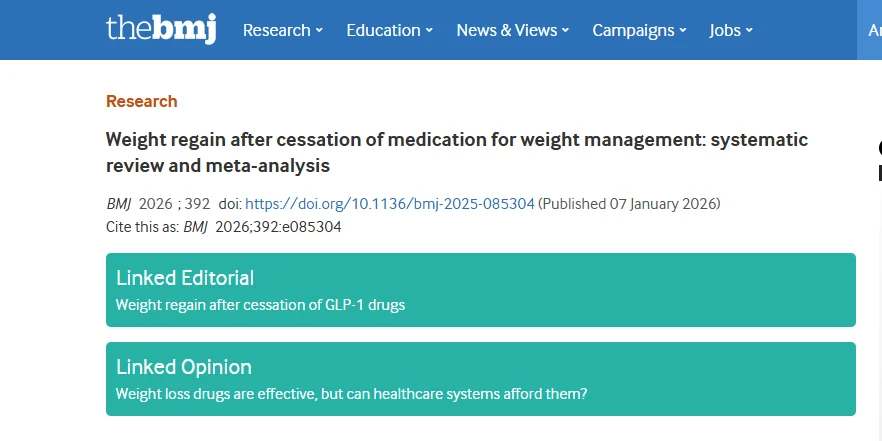
A large-scale meta-analysis of previous studies has found that the benefits gained in weight loss and other health indicators by obese or overweight patients typically disappear within two years once they stop taking weight-loss medications.

Researchers analyzed data from 9,341 obese or overweight patients across 37 studies who had used 18 different weight-loss drugs. The results showed that after discontinuation, patients regained an average of nearly 1 pound (approx. 0.4 kg) per month. It is estimated that patients return to their pre-treatment weight levels within 1.7 years.

“Effect Zeroed Out” in Less Than Two Years

The study, published in The BMJ (British Medical Journal), indicates that as medication is stopped, cardiovascular risk factors improved by the treatment—including blood pressure and cholesterol levels—return to pre-treatment levels within an average of 1.4 years. Essentially, the clinical benefits are “zeroed out” in less than two years.

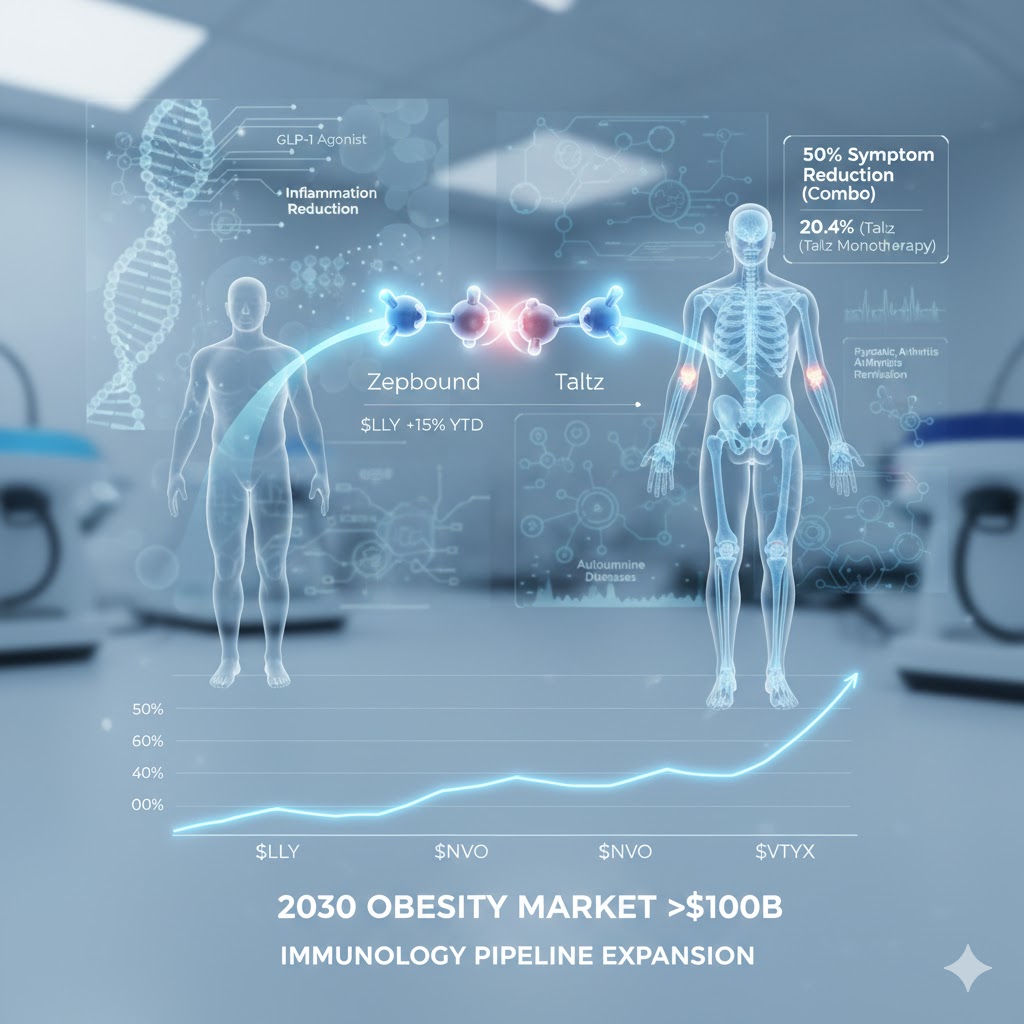
Among all subjects, approximately half had used GLP-1 receptor agonists. This included 1,776 individuals treated with the newest generation of more potent drugs: Semaglutide (marketed as Ozempic and Wegovy) by Novo Nordisk (NVO), and Tirzepatide (marketed as Mounjaro and Zepbound) by Eli Lilly (LLY).

A Structural Shift in Obesity Treatment

For a long time, weight loss achieved through diet and physical activity was considered the cornerstone of obesity treatment. However, the advent of GLP-1 drugs is driving a profound structural transformation. These new medications can help patients lose 15%–20% of their baseline weight within a year while simultaneously improving cardiometabolic markers such as blood sugar, blood pressure, and lipids. They have even shown positive signals in treating fatty liver disease, sleep apnea, and reducing the incidence of cardiovascular events.

The study found that weight regain was faster among patients using Semaglutide or Tirzepatide, with an average increase of approximately 1.8 pounds (0.8 kg) per month post-discontinuation.

However, Dimitrios Koutoukidis, the lead researcher from the University of Oxford and senior author of the study, noted: “Because Semaglutide and Tirzepatide produce much larger initial weight loss, these patients ultimately reach the point of returning to baseline weight at roughly the same time as users of other weight-loss drugs.” Specifically, the return to baseline for the new generation of GLP-1 drugs is about 1.5 years, compared to the 1.7-year average for all weight-loss drugs combined.

Biological Dependence and Long-term Management

The research also discovered that regardless of how much weight was initially lost, the monthly rate of regain after stopping medication was generally faster than that seen in weight management programs relying solely on behavioral interventions (such as diet and exercise). This suggests that pharmacological weight loss is physiologically more dependent on continuous intervention; once interrupted, the body’s strong compensatory mechanisms rapidly kick in.

As this was a retrospective analysis, researchers could not determine which specific patients were more likely to successfully maintain their weight after stopping the drugs. “Figuring out ‘who can maintain weight loss and who cannot’ is almost the Holy Grail of obesity research, but no one has a definitive answer yet,” Koutoukidis said.

Investment and Industry Perspective

From an industry and capital markets perspective, this research reinforces an increasingly clear conclusion: GLP-1 weight-loss drugs are “chronic long-term management tools” rather than one-time treatments. Rather than diminishing the revolutionary value of GLP-1 drugs, the study validates their product attributes of high user “stickiness” and sustained long-term demand from a long-term perspective.

Goldman Sachs: “Middle-Class Consumption” to Take the Baton for 2026 U.S. Stock Bull Market After AI Craze

In its latest outlook, Goldman Sachs points out that as the Artificial Intelligence fever potentially cools, “Middle-Class Consumption” is poised to become the primary engine driving the 2026 U.S. stock bull market.

Goldman Sachs strategist Ben Snider and his team noted that with expected economic growth in the U.S., the market focus should shift toward companies benefiting from the expansion of middle-class spending—particularly those in the “lifestyle improvement” and “experience-based” goods and services sectors.

The team favors businesses offering “Want-to-Have” rather than “Need-to-Have” products, such as upscale apparel retailers, home goods manufacturers, tour operators, and casinos. They believe that the fading negative impact of Trump’s tariff policies, a stabilizing labor market, and tax refunds from prior legislation will collectively boost consumer confidence and spending power.

Market data has already begun to validate this trend: the S&P Retail Select Industry Index has risen 3.5% year-to-date and has climbed 8.8% since the start of last November’s holiday shopping season. The index, which includes companies like CarMax, Etsy, and Academy Sports & Outdoors, reflects investors rotating out of the tech sector—which has led gains in recent years—and into consumer stocks that previously lagged.

Rotation from Growth to Value

As valuations for AI-themed trades reach historical highs, Wall Street is initiating a structural rotation from growth stocks to value stocks. A Bloomberg survey shows that economists expect the U.S. economy to grow by 2.1% in 2026, driven by consumer spending. This macro backdrop is guiding capital away from overheated tech valuations toward value stocks directly linked to real economic recovery and middle-class purchasing power.

In a report to investors on January 6, Goldman Sachs stated:

“Stocks linked to middle-income consumer spending are particularly attractive. Value stocks will continue to outperform the broader market in early 2026. Real income growth for middle-income consumers is set to accelerate, which should translate into improved sales growth.”

Charlie McElligott, cross-asset macro strategist at Nomura Securities International, noted that the core of this shift lies in the market’s re-pricing of economic growth expectations. He stated:

“The market is raising growth forecasts, which, if realized, will benefit traditional value sectors. Last year’s market gains were dominated by a handful of stocks (about 12), whereas the current rally’s breadth is significantly widening as capital rotates into more volatile sectors closely tied to the fate of the American ‘Main Street’ consumer.”

Retailers Emerge as Early Winners

Dick’s Sporting Goods (DKS) has emerged as an early beneficiary of this rotation toward the “middle-class consumption” theme. The sporting goods retailer saw its shares rise 6.1% in the first four trading days of 2026, reversing a 13% decline from the previous year. This strong start confirms the recovery expectations held by institutions like Goldman Sachs.

On Tuesday local time, an options trader bet that the stock would return to its early 2025 all-time high of $250 per share. A premium of $84,000 was placed on a trade that could potentially yield up to $3.5 million, signaling significant optimism about the company’s outlook.

Goldman Sachs has explicitly included Dick’s Sporting Goods in its recommended “Middle-Class Consumption” portfolio, alongside six other retail chains including Burlington Stores (BURL) and Best Buy (BBY). The firm also expressed a bullish stance on the Healthcare, Materials, and Consumer Staples sectors, believing these areas will benefit directly from the wealth growth and accelerating real income of the middle-income demographic.