Ford Motor Co. (F) plans to introduce Level 3 (L3) autonomous driving technology within two years, a move that could propel the traditional American automaker into the burgeoning Robotaxi sector.
On Wednesday (January 7), local time, Doug Field—Ford’s Chief EV, Digital, and Design Officer—announced that the company will launch L3 (conditional) autonomous driving technology in 2028, building upon its existing “BlueCruise” system.
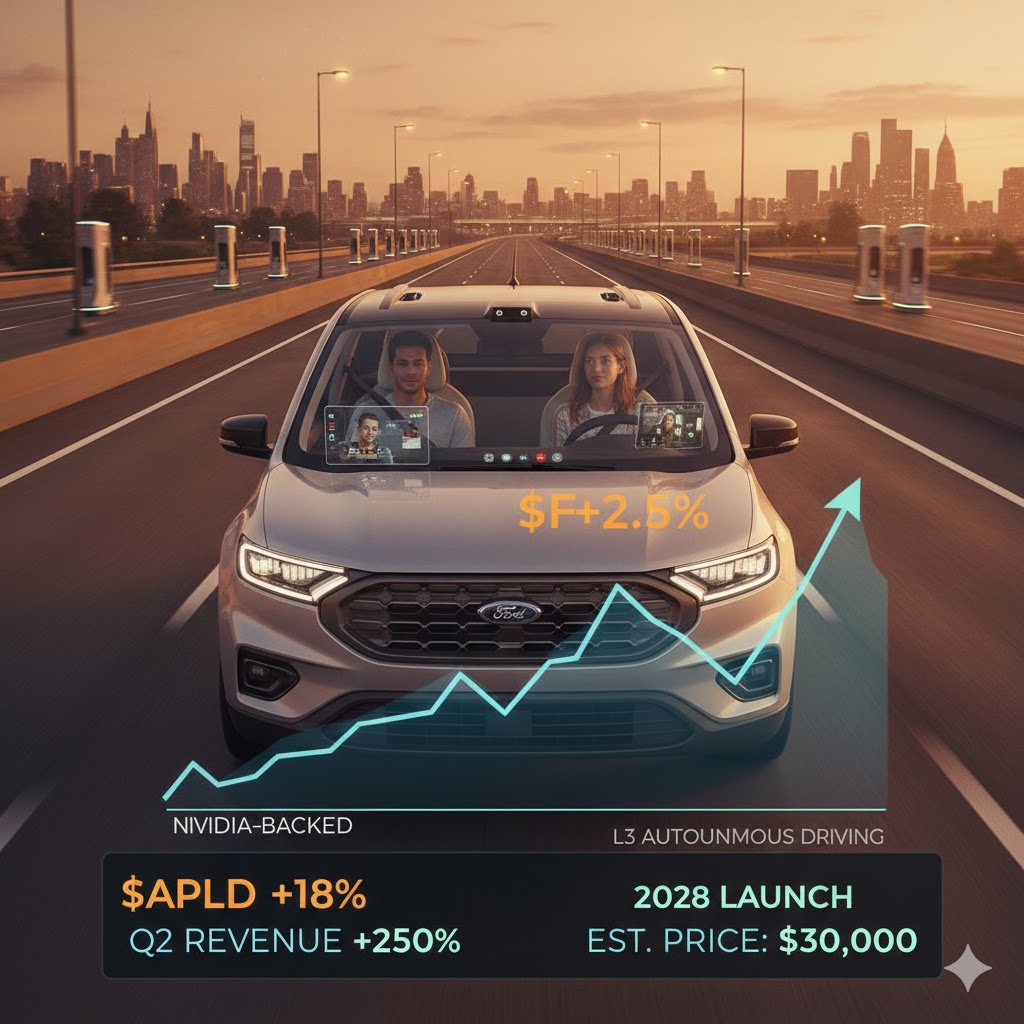
Currently, BlueCruise offers Level 2 “hands-free” driving but still requires drivers to keep their eyes on the road. In an interview, Field stated that the new version, which will allow for “eyes-off, hands-off” operation, will first debut on Ford’s upcoming affordable electric small pickup platform, priced at approximately $30,000.
Speaking at the 2026 Consumer Electronics Show (CES 2026) in Las Vegas, Field explained that this technology will enable drivers to safely conduct video conferences or enjoy entertainment while on the move. Ford anticipates this feature will become a high-demand necessity for future consumers.
“Time is near the top of the list of what people need most today,” Field said. “We believe this feature will be incredibly compelling.”
If the technology gains the level of adoption Ford expects, Field did not rule out the possibility of using it to enter the Robotaxi business. He noted that such a move would be a “natural extension” for Ford Pro, the company’s commercial vehicle division.
“We don’t want to move too fast right now, but we believe we have a very attractive platform to advance this with partners,” he said. “The extent to which L3 driving ultimately evolves will dictate our long-term strategy.”
Before joining Ford, Field held senior roles at Apple and Tesla. He previously served as Tesla’s Senior Vice President of Engineering, leading the development of the Model 3, and was responsible for Mac hardware development at Apple.
If Ford proceeds with the Robotaxi race, it would mark a significant strategic pivot. In 2022, Ford shut down its autonomous driving subsidiary, Argo AI, and abandoned plans for fully self-driving cars; at the time, Field described the task as “harder than putting a man on the moon.”
However, he now believes “there are many forces encouraging the industry to re-evaluate the potential of automated ride-hailing.” Currently, Tesla and Google (Waymo) are the dominant players in automated mobility—a market Wall Street widely views as having immense profit potential.
For now, Ford remains focused on selling L3 autonomy to everyday consumers. Field stated that the company is still evaluating pricing models, which could include a one-time fee, a per-mile charge, or a subscription service.
Because the technology was developed in-house using lower-cost components, Field claims Ford will have a competitive pricing advantage, making it affordable for a broader range of consumers.
“We are putting this system on a platform starting at the $30,000 level, rather than layering L3 systems onto high-end models priced between $70,000 and $100,000 like most of our competitors,” Field emphasized. “That is a critical distinction.”