Alphabet (GOOGL) is introducing new personalized advertising features within its AI shopping tools, marking a pivotal step forward for tech giants in the race to monetize artificial intelligence.
On Sunday, Google announced that advertisers will now be able to offer exclusive deals to consumers preparing to purchase items through Google’s “AI Mode,” which is powered by its Gemini model. This move represents a significant evolution of Google’s traditional advertising paradigm.
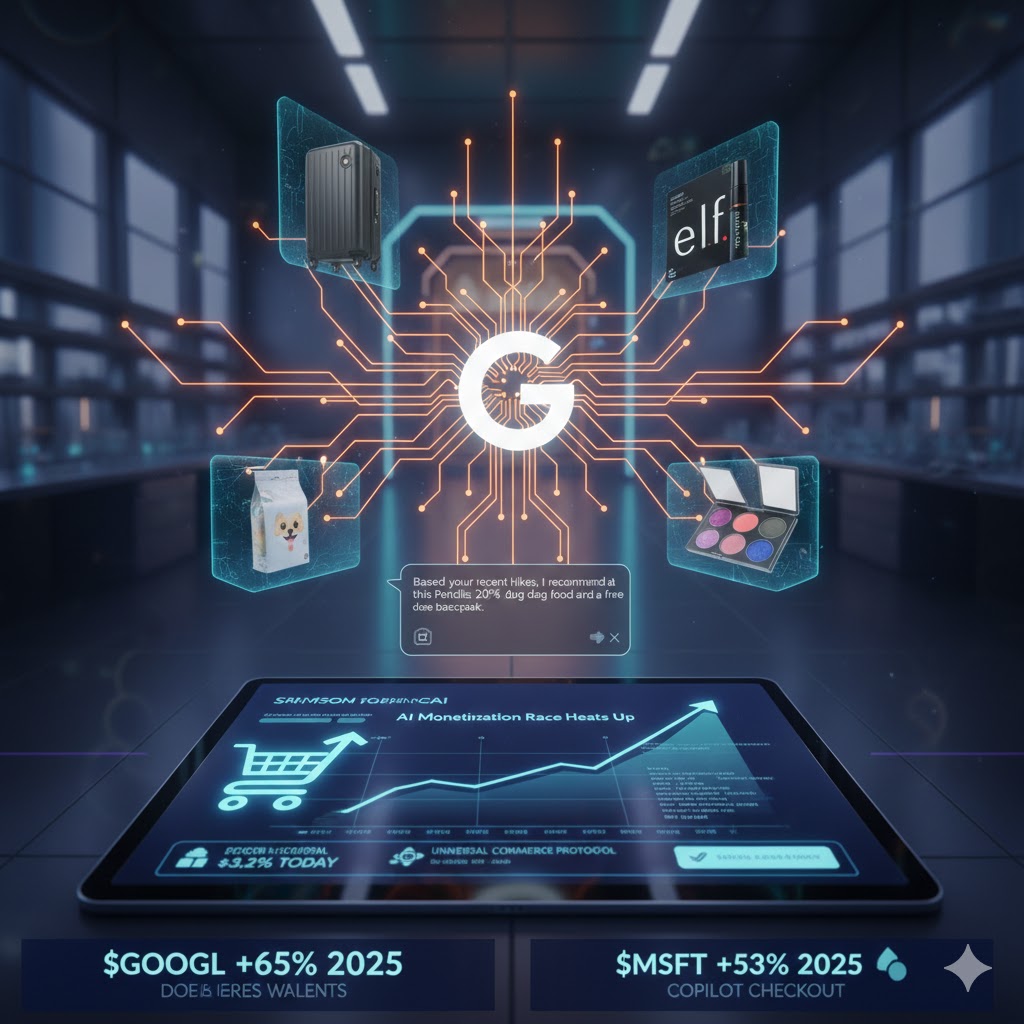
“This is a new concept that moves beyond our traditional search advertising model,” said Vidhya Srinivasan, Vice President of Google Ads and Commerce. She noted that it enables retailers to provide value to AI-assisted shoppers at the most critical moments “to close the deal.” Google’s AI will determine precisely when to display these offers based on user shopping behavior and purchase probability.
The move comes as AI chatbots pose a potential threat to Google’s traditional “sponsored” ad placements, which generate tens of billions of dollars in annual revenue. Simultaneously, Google seeks to capitalize on the momentum of its latest large language model, Gemini 3, which has gained significant ground in its competition against OpenAI’s GPT-5.
Google also unveiled a “Universal Commerce Protocol,” allowing shopping agents to research products and complete purchases directly within its platform. The protocol was co-developed with major retailers and marketplaces, including Walmart, Target, and Shopify.
Beyond the Traditional Search Ad Model
The new advertising capabilities from Alphabet (GOOGL) allow brands to provide highly personalized ads—such as discount codes—through its chatbot, giving it an edge over AI rivals. This feature leverages contextual information from the user’s conversation with the chatbot and triggers offers based on relevant products the user has clicked on.
Retailers define the offers they wish to provide, while Google’s AI determines the optimal timing to present these deals to potential customers. Existing partners in Google Shopping include pet brand Petco, e.l.f. Cosmetics, and luggage manufacturer Samsonite.
Srinivasan indicated that while the initial pilot focuses on discounts, it will expand to support offers with other attributes. This will help shoppers prioritize value beyond just price, such as bundled deals and free shipping.
The AI Monetization Race Heats Up
Alphabet (GOOGL) is leveraging its massive market share in online search to expose its AI models to billions of users through the “AI Mode” added to search pages last year. Its standalone chatbot, Gemini, currently still trails ChatGPT in terms of popularity.
Last month, OpenAI suspended internal discussions regarding advertising products after CEO Sam Altman declared a “Code Red” to improve ChatGPT. This shift stemmed from concerns that competitors were narrowing OpenAI’s early lead in cutting-edge technology development.
Over the past year, AI firms including OpenAI, Microsoft, and Perplexity have raced to launch e-commerce features within their chatbots to find new ways to generate revenue from their popular but expensive AI products. As first reported by the Financial Times, OpenAI has been rolling out its own checkout feature, where the AI startup takes a commission on sales made via ChatGPT.
Tech Giants Bet on AI Shopping
On Thursday, Microsoft (MSFT) launched “Copilot Checkout,” which also offers recommendations and checkout services to users within its AI chat. Microsoft stated that users shopping through Copilot were 53% more likely to make a purchase within 30 minutes of interaction compared to those not using the feature.
At the National Retail Federation’s annual show in New York, Google CEO Sundar Pichai stated, “We need to work together. I think if we do it well, this will be an extraordinary moment of expansion.”
The “Universal Commerce Protocol” launched by Alphabet (GOOGL) will enable shopping agents to research and purchase products without leaving the platform, further solidifying the partnership between AI and major retailers like Walmart, Target, and Shopify.