$Berkshire Hathaway-B (BRK.B)$ shares fell on Friday as investors digested the official conclusion of Warren Buffett’s six-decade tenure as chief executive and the significant transition to a new era under his successor, Greg Abel.
On the first trading day of 2026—and Greg Abel’s first day as official Chief Executive—Berkshire shares opened lower and declined nearly 2% during the session. The stock closed down 1.15%, underperforming the broader U.S. market. This follows the formal handover of roles by Buffett, marking the end of one of the most legendary leadership periods in corporate history.
Berkshire Hathaway rose 10.9% in 2025, lagging behind the S&P 500’s 16.4% gain, but marking its 10th consecutive year of positive returns. The 95-year-old Buffett remains Chairman and has sought to reassure shareholders that Berkshire’s future extends far beyond his tenure.
In a special interview with CNBC, Buffett stated, “I think its chances of being around 100 years from now are as great as any company I can think of.”
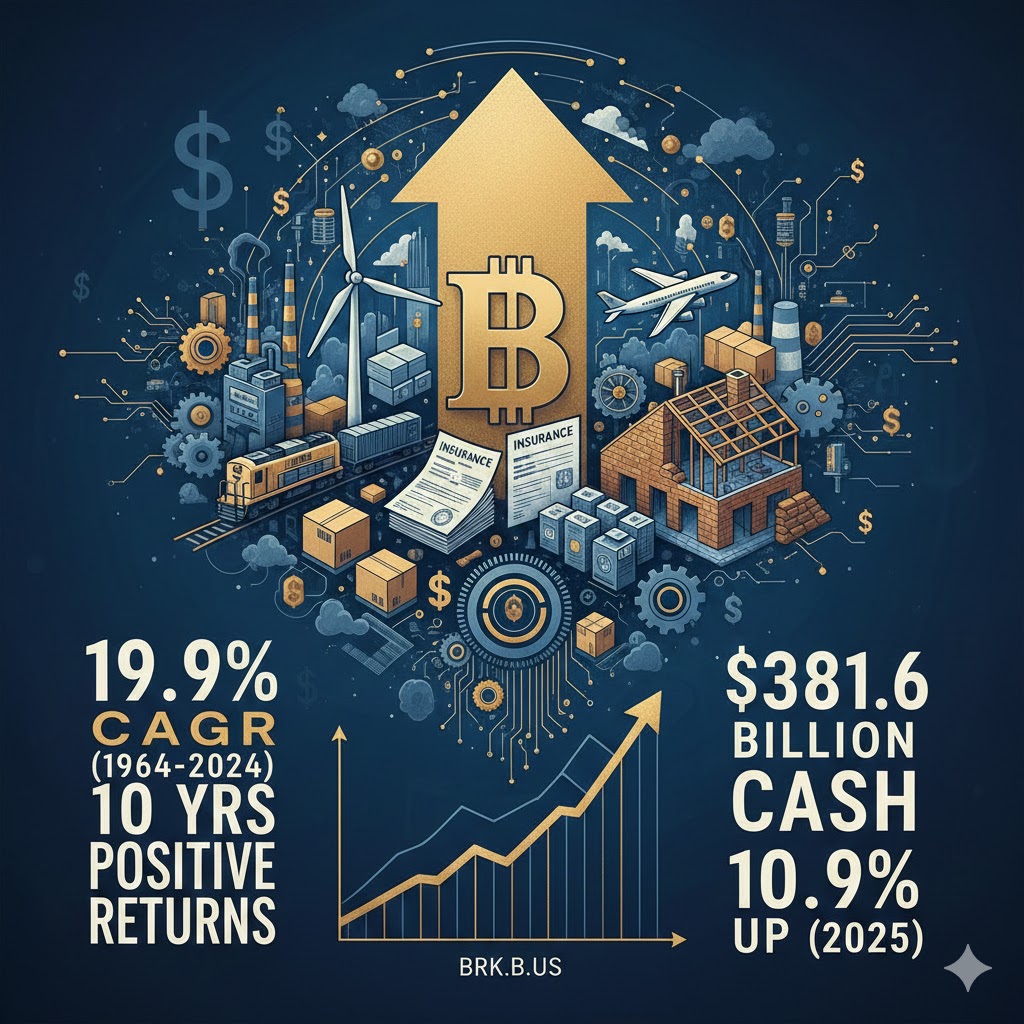
As of the end of last September, Berkshire’s cash reserves reached a record $381.6 billion, following a prolonged period of net stock sales. Buffett has noted that Abel will have the final say on capital allocation decisions. Buffett said:
“The person who makes the decisions will be Greg Abel. I can’t imagine him accomplishing less in a week than I do in a month. I would rather have Greg managing my money than any top investment advisor or top CEO in America.”
Since Buffett announced his retirement plans last May, Berkshire’s stock performance has lagged the broader market. Some investors are evaluating whether Abel can manage the massive system of operating businesses and equity portfolios at the same level while continuing to support its premium valuation.
Buffett leaves behind an unmatched track record. Since taking over Berkshire in the mid-1960s, he transformed a struggling textile company into a compounding giant. Between 1964 and 2024, Berkshire achieved a compounded annual return of 19.9%, nearly double the S&P 500’s 10.4%.