A top executive at Micron Technology recently stated that the shortage of memory chips has accelerated significantly over the past quarter, reiterating that the supply crunch will persist beyond this year due to surging demand for high-end semiconductors driven by AI infrastructure.
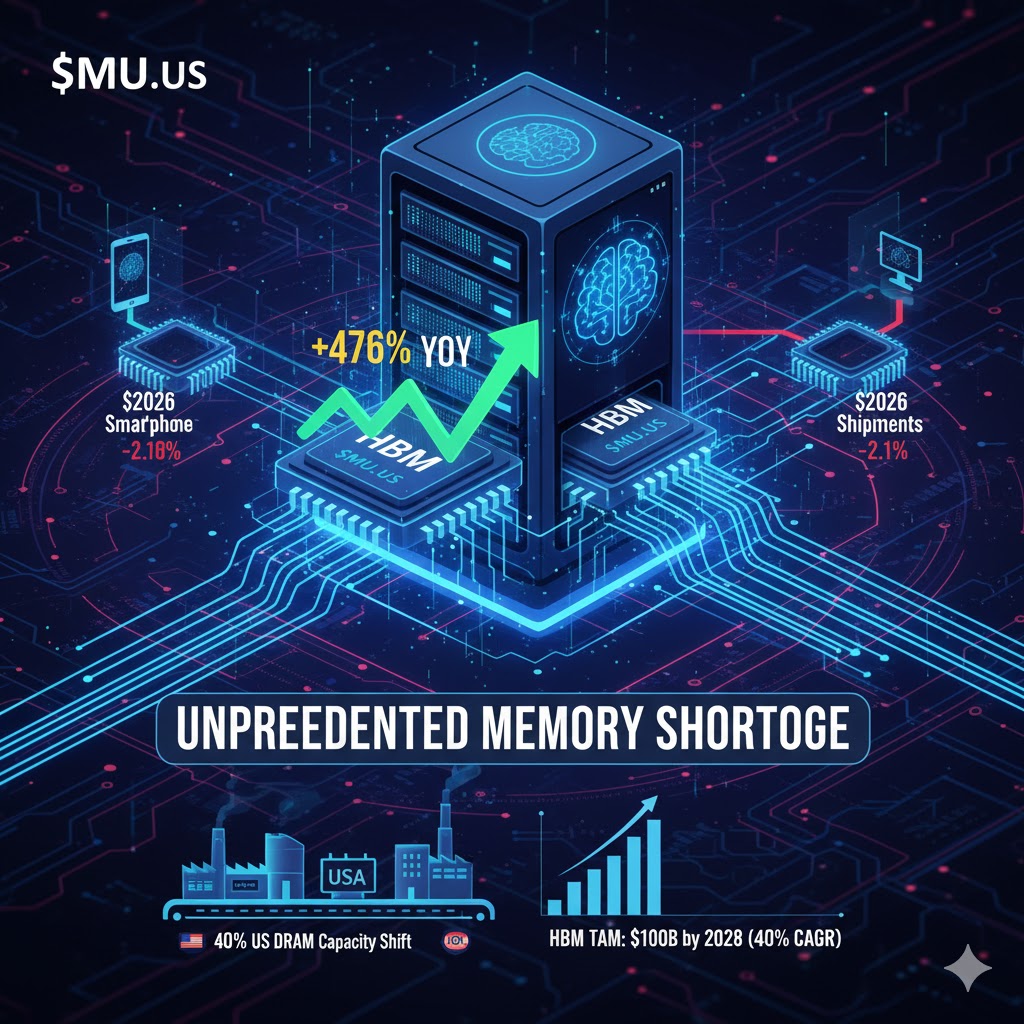
On Friday, January 16, Manish Bhatia, Micron’s Executive Vice President of Global Operations, stated in an interview: “The shortage we are seeing right now is truly unprecedented”—a sentiment that echoes the company’s forecasts from last month.
Bhatia noted that HBM (High Bandwidth Memory), essential for AI accelerators, is “consuming a massive amount of the industry’s available capacity, leading to significant supply gaps in traditional sectors such as smartphones and PCs.”
Last month, Micron Technology (MU) CEO Sanjay Mehrotra stated during an earnings call that the total addressable market (TAM) for HBM is expected to grow at a compound annual growth rate (CAGR) of approximately 40%, rising from roughly $35 billion in 2025 to about $100 billion by 2028.
Bhatia added that manufacturers of PCs and smartphones have already joined the scramble to secure memory chip supplies for 2026 and beyond. Meanwhile, the rise of autonomous vehicles and humanoid robots is expected to further drive up demand for these components.
In December last year, market research firm Counterpoint Research estimated that global smartphone shipments would decline by 2.1% in 2026, as memory shortages drive up Bill of Materials (BoM) costs. Major manufacturers, including Dell Technologies, have also warned that the ongoing memory shortage is likely to impact their operations.
Driven by the AI boom, the stock prices of the “Big Three” global memory giants—Micron (MU), SK Hynix, and Samsung Electronics—surged throughout 2025. SK Hynix has already stated that its chip production capacity for 2026 is fully sold out.
To prioritize supply for strategic enterprise customers like Nvidia, Micron announced last month that it would terminate its Crucial consumer business. The AI industry’s “insatiable” demand for memory has also accelerated Micron’s capacity expansion efforts in the U.S. and Asia.
“Our facilities in Asia will continue to transition to next-generation technologies,” Bhatia said during the interview, adding that almost all new wafer capacity will be located in the United States. Previously, Micron committed to shifting 40% of its DRAM manufacturing capacity to U.S. soil.