Musk’s “Optimus” Robot: Still Dependent on Remote Control, Facing Dexterity Challenges, and Internal Doubts Over Practicality

Elon Musk has staked the future of $Tesla (TSLA) and his personal fortune on the grand vision of the “Optimus” humanoid robot, claiming the product will generate “infinite” revenue and become “the biggest product ever.”

However, according to The Wall Street Journal, a massive gap remains between current reality and the societal transformation Musk describes. In public appearances, Optimus often relies on remote operation by engineers and faces severe technical hurdles in mimicking human hand dexterity.
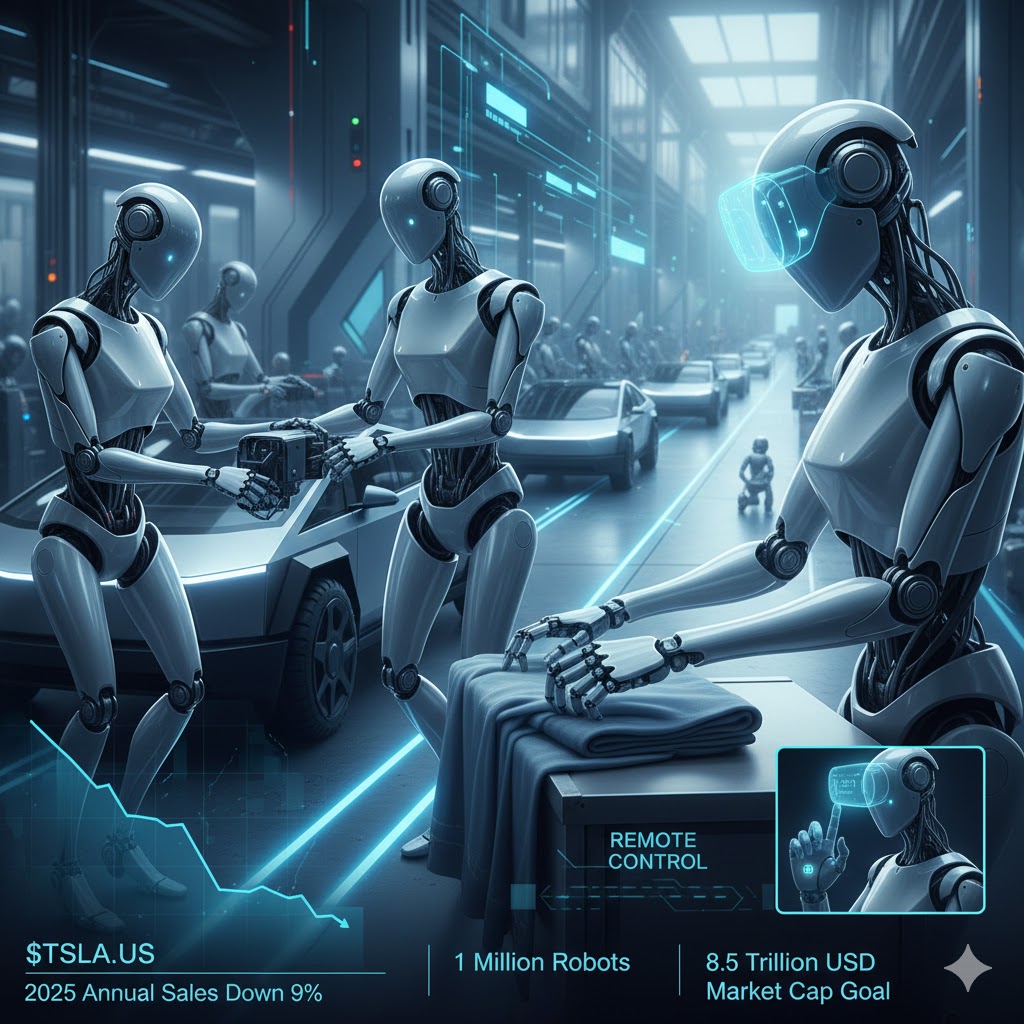
During recent high-profile demonstrations, the robot’s performance was not entirely autonomous. Reports indicate that at the October 2024 event at the Warner Bros. studio, while some robots performed programmed dances, those interacting with guests and serving drinks were actually being remotely controlled by engineers behind the scenes wearing motion-capture suits and VR headsets. This “human-in-the-loop” reality suggests a significant technological chasm remains before Optimus can achieve Musk’s goal of fully replacing human labor.

This strategic pivot comes as Tesla’s core business faces mounting pressure. On Friday, the company reported a 9% decline in vehicle sales for the full year of 2025, with a 16% drop in the fourth quarter, trailing China’s BYD in annual volume. Amid slowing EV sales, Musk is attempting to revive investor confidence by shifting focus toward Robotaxis and humanoid robots. Musk’s new compensation package sets a target for Tesla to reach a $8.5 trillion market capitalization within 10 years and sell at least one million robots.

While capital markets remain focused on the long-term prospects of the robotics industry, internal voices at Tesla and industry experts are divided over the practicality of Optimus. On one hand, engineers have hit bottlenecks in creating mechanical hands with human-like sensing and dexterity; on the other, some employees question whether a humanoid form is truly more efficient than purpose-built automation for routine factory tasks.

Remote Control and the “Behind-the-Scenes” Reality

Although Optimus has become a regular at Tesla events—even appearing at the Hollywood premiere of Tron: Ares—the project remains in a development stage heavily reliant on manual assistance behind the polished demonstrations.

Sources told The Wall Street Journal that during last year’s event, every robot interacting with people required real-time monitoring and operation by multiple engineers: one wearing equipment for remote control, one monitoring via laptop, and others on-site to ensure the robot’s physical stability. At Tesla’s engineering headquarters in Palo Alto, while robots frequently walk through offices to collect navigation data, former employees describe instances where engineers had to use hoists to lift the robots back up after they fell.

While this “remote-control” mode showcases future possibilities, it also exposes the limitations of current autonomous capabilities. Ken Goldberg, a robotics expert at UC Berkeley, noted that while Musk is right that building mechanical hands is a challenge, the difficulty lies not just in the hand’s structure, but in control systems, environmental perception, and the ability to compensate for uncertainty. Enabling a robot to perform truly “useful” tasks remains the frontier of current research.

The Dexterity Bottleneck and Internal Practicality Debates

Inside Tesla’s labs, Optimus is practicing mechanical tasks like sorting LEGO bricks and folding laundry. However, granting a robot the dexterity and environmental understanding required to perform tasks like clearing a dinner table remains fraught with difficulty.

Beyond technical challenges, there are dissenting voices within Tesla regarding the commercial logic of humanoid robots. According to former manufacturing engineers, while Optimus may be capable of simple hauling, non-humanoid robots designed for specific tasks are likely more efficient in most factory scenarios.

Evan Beard, CEO of competitor Standard Bots, pointed out that for factories, warehouses, or agriculture, “wheels” are often more practical than “legs.” He argues that wheeled robots are more stable and safer, whereas bipedal robots are inherently unstable when powered down, posing a risk of collapsing and injuring people. Nevertheless, Musk insists on the humanoid design, believing it allows robots to adapt to environments built for humans.

Market Valuation and Analyst Caution

Musk has painted an incredibly ambitious blueprint for Tesla, aiming to shed its label as a mere EV manufacturer through its robotics business. Morgan Stanley analyst Adam Jonas believes cars are to Tesla what books were to Amazon—merely a springboard into other sectors. Jonas predicts that by 2050, the global humanoid robot industry could generate $7.5 trillion in annual revenue; if Tesla can capture a share, it would drastically scale its income.

However, given the industry’s infancy, some analysts have excluded Optimus from their valuation models. Even ARK Invest, a long-term Tesla bull that predicts the stock could reach $2,600, has not included Optimus in its 2029 financial model, citing the likelihood that the product will take longer to reach commercial maturity. Tasha Keeney, a director at ARK Invest, stated that the tasks early versions of the robot can perform may be very limited.

Currently, Tesla has pushed back the preliminary timeline for deploying Optimus commercially in its own factories and is developing a third-generation robot. Although Musk’s marketing positions Optimus as a “home butler” capable of handling chores—likening it to C-3PO or R2-D2 from Star Wars—Tesla still needs a substantial breakthrough in eliminating manual control and improving engineering practicality to turn this “biggest product ever” into a reality and a profit-maker.

First Trading Day of the New Year for U.S. Stocks: Defensive Sectors Like Energy Lead Gains While Tech Stocks Slide

On the first trading day of 2026, the U.S. stock market continued the market rotation trend seen at the end of 2025. Investors persisted in shifting from last year’s leading tech stocks toward defensive sectors such as energy and utilities. The $Dow Jones Industrial Average (.DJI)$ outperformed the $Nasdaq Composite Index (.IXIC)$ and the $S&P 500 Index (.SPX)$.

On Friday, the S&P 500 rose 0.2%, the Dow Jones Industrial Average climbed 0.7%, and the Nasdaq Composite fell slightly by 0.1%, marking its fifth consecutive trading day of losses. Tech stocks such as $Palantir (PLTR)$, $Applovin (APP)$, and $Microsoft (MSFT)$ dragged down the performance of major indices, while share prices in the energy, materials, and utilities sectors rose.

This market shift reflects simmering investor concerns regarding valuations and profitability within the artificial intelligence sector. Traders are rotating away from the “star stocks” of the AI field toward more defensive or diversified industry choices.

Tech Stocks Continue to Show Weakness

Performance among tech giants was mixed during Friday’s trading.

Shares of $Amazon (AMZN)$ and $Meta Platforms (META)$ retreated, while $Tesla (TSLA)$ fell 2.6% after reporting another year of declining delivery figures. Tesla shares have now fallen for seven consecutive trading days, setting a record for the stock’s longest losing streak in over a year.

Chipmakers $NVIDIA (NVDA)$ and $Micron Technology (MU)$ saw their shares rise, and data storage companies $Western Digital (WDC)$ and SanDisk also saw gains, serving as rare highlights within the tech sector.

The precious metals market experienced sharp volatility this week. Silver prices rose 0.6% on Friday, while gold suffered a cumulative weekly decline of 4.9%, marking its largest one-week drop since 2021.

AI Hype Faces a Critical Test

Following three consecutive years of strong stock market gains, whether artificial intelligence can drive major indices to new heights in 2026 has become a central concern for investors. In the final weeks of 2025, anxieties over AI spread across Wall Street, with critics pointing to overstretched tech valuations and expressing concern over the circular nature of certain transactions among major industry players.

David Bahnsen, Chief Investment Officer at The Bahnsen Group, stated: “The theme entering 2026 is a continuation of what we saw in late 2025—a very interesting and somewhat unexpected broadening of the market. There is a great deal of uncertainty surrounding how AI will be monetized.”

Jed Ellerbroek, Portfolio Manager at Argent Capital Management, noted that investors experienced a similar panic early last year when the Chinese company DeepSeek launched a low-cost AI model, yet the market rebounded quickly after a sell-off and continued to climb throughout the year. “Back then, it was more fear than fact,” Ellerbroek said.

Cautiously Optimistic Market Outlook

Although trading this week was relatively light and influenced by the New Year holiday, the rotation by investors was clearly visible. The Dow Jones outperformed the Nasdaq and S&P 500 in both November and December as traders shifted toward more defensive or diversified industry allocations.

Many investors still expect the stock market to continue rising in 2026. According to Dow Jones Market Data, the “January Barometer” hypothesis has been validated over the past four years—when the S&P 500 rises in January, there is a 79% probability that it will finish the year higher.

However, Bahnsen believes the market needs more clarity on AI concerns and economic direction before a clear upward trend can emerge in the early weeks of 2026. “Most market participants are neither brave enough to be excessively bullish nor excessively bearish,” he said. “That often leads to a sideways market.”

The Official Start of the Berkshire-Abel Era Sees Its Stock Lag the U.S. Market on Day One

$Berkshire Hathaway-B (BRK.B)$ shares fell on Friday as investors digested the official conclusion of Warren Buffett’s six-decade tenure as chief executive and the significant transition to a new era under his successor, Greg Abel.

On the first trading day of 2026—and Greg Abel’s first day as official Chief Executive—Berkshire shares opened lower and declined nearly 2% during the session. The stock closed down 1.15%, underperforming the broader U.S. market. This follows the formal handover of roles by Buffett, marking the end of one of the most legendary leadership periods in corporate history.

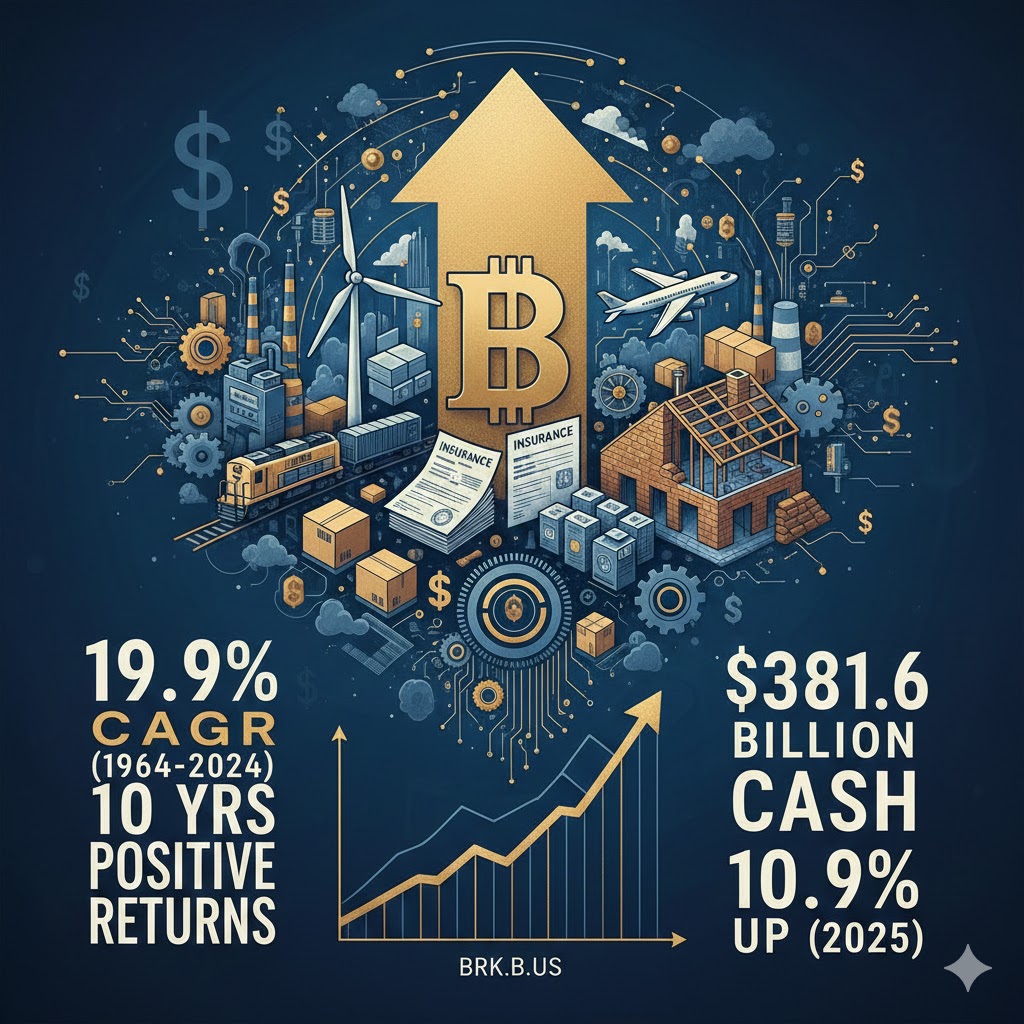
Berkshire Hathaway rose 10.9% in 2025, lagging behind the S&P 500’s 16.4% gain, but marking its 10th consecutive year of positive returns. The 95-year-old Buffett remains Chairman and has sought to reassure shareholders that Berkshire’s future extends far beyond his tenure.

In a special interview with CNBC, Buffett stated, “I think its chances of being around 100 years from now are as great as any company I can think of.”

As of the end of last September, Berkshire’s cash reserves reached a record $381.6 billion, following a prolonged period of net stock sales. Buffett has noted that Abel will have the final say on capital allocation decisions. Buffett said:

“The person who makes the decisions will be Greg Abel. I can’t imagine him accomplishing less in a week than I do in a month. I would rather have Greg managing my money than any top investment advisor or top CEO in America.”

Since Buffett announced his retirement plans last May, Berkshire’s stock performance has lagged the broader market. Some investors are evaluating whether Abel can manage the massive system of operating businesses and equity portfolios at the same level while continuing to support its premium valuation.

Buffett leaves behind an unmatched track record. Since taking over Berkshire in the mid-1960s, he transformed a struggling textile company into a compounding giant. Between 1964 and 2024, Berkshire achieved a compounded annual return of 19.9%, nearly double the S&P 500’s 10.4%.