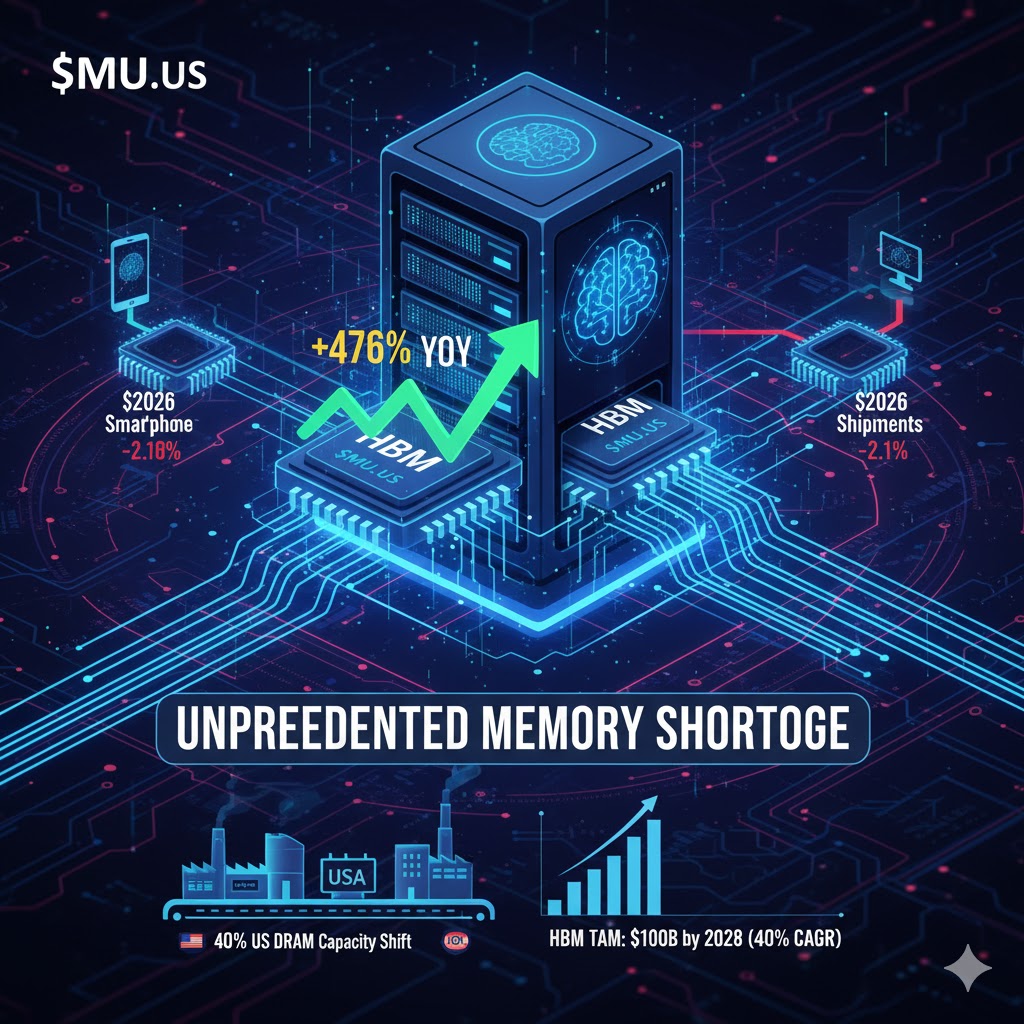
A top executive at Micron Technology recently stated that the shortage of memory chips has accelerated significantly over the past quarter, reiterating that the supply crunch will persist beyond this year due to surging demand for high-end semiconductors driven by AI infrastructure.
On Friday, January 16, Manish Bhatia, Micron’s Executive Vice President of Global Operations, stated in an interview: “The shortage we are seeing right now is truly unprecedented”—a sentiment that echoes the company’s forecasts from last month.
Bhatia noted that HBM (High Bandwidth Memory), essential for AI accelerators, is “consuming a massive amount of the industry’s available capacity, leading to significant supply gaps in traditional sectors such as smartphones and PCs.”
Last month, Micron Technology (MU) CEO Sanjay Mehrotra stated during an earnings call that the total addressable market (TAM) for HBM is expected to grow at a compound annual growth rate (CAGR) of approximately 40%, rising from roughly $35 billion in 2025 to about $100 billion by 2028.
Bhatia added that manufacturers of PCs and smartphones have already joined the scramble to secure memory chip supplies for 2026 and beyond. Meanwhile, the rise of autonomous vehicles and humanoid robots is expected to further drive up demand for these components.
In December last year, market research firm Counterpoint Research estimated that global smartphone shipments would decline by 2.1% in 2026, as memory shortages drive up Bill of Materials (BoM) costs. Major manufacturers, including Dell Technologies, have also warned that the ongoing memory shortage is likely to impact their operations.
Driven by the AI boom, the stock prices of the “Big Three” global memory giants—Micron (MU), SK Hynix, and Samsung Electronics—surged throughout 2025. SK Hynix has already stated that its chip production capacity for 2026 is fully sold out.
To prioritize supply for strategic enterprise customers like Nvidia, Micron announced last month that it would terminate its Crucial consumer business. The AI industry’s “insatiable” demand for memory has also accelerated Micron’s capacity expansion efforts in the U.S. and Asia.
“Our facilities in Asia will continue to transition to next-generation technologies,” Bhatia said during the interview, adding that almost all new wafer capacity will be located in the United States. Previously, Micron committed to shifting 40% of its DRAM manufacturing capacity to U.S. soil.
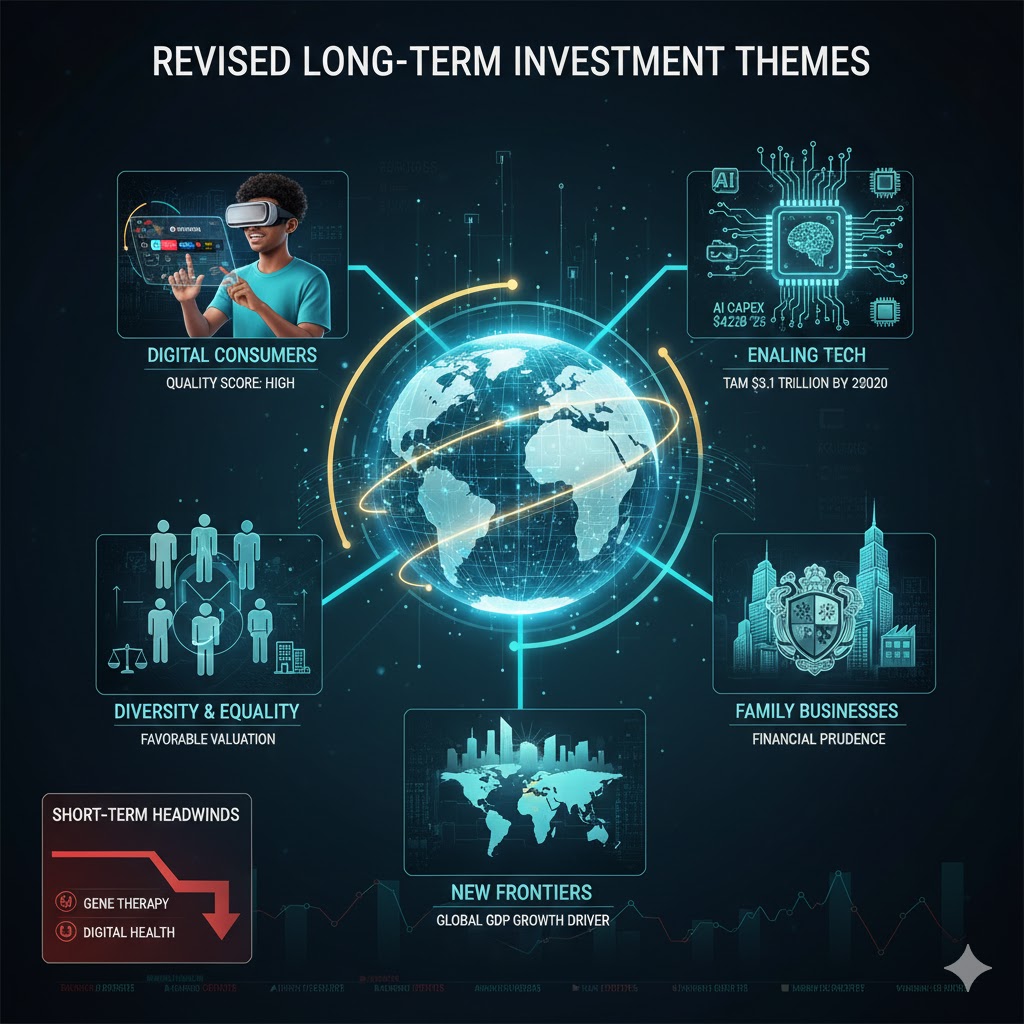
UBS Group AG(NYSE:UBS) has released a research report stating that, according to its proprietary long-term investment theme model, five specific themes currently offer the most compelling investment opportunities. These five primary themes are: Digital Consumers, Enabling Technologies, Diversity and Equality, Family Businesses, and Searching for New Frontiers. Conversely, the themes of Gene Therapy and Digital Health are expected to face short-term headwinds; UBS suggests investors take a tactical step back to review their exposure in these areas.
UBS explained that to identify attractive entry points for long-term themes, the bank utilizes a quantitative model combined with qualitative input from thematic analysts. The quantitative model primarily relies on metrics such as valuation, momentum signals, and fundamental quality. Qualitative factors include alignment with the Chief Investment Office’s (CIO) core views, key risks, and potential new catalysts.
Below are the five preferred long-term investment themes identified by UBS:
1. Digital Consumers
Investment Logic: Younger generations are digital natives whose consumption patterns differ from their parents and influence older generations’ behaviors. Due to digitalization, there are more touchpoints influencing consumer decisions than ever before, rewriting the rules of online business. For younger people, sharing experiences or spending on experiences is often more important than owning physical goods. Artificial intelligence will revolutionize every aspect of our lives, giving rise to new experiences. The combination of traditional sectors (travel and leisure) with emerging virtual domains (e-commerce, metaverse, social media, advertising) represents the key investment opportunity within this theme.
Why Invest Now: The Digital Consumer theme ranks first among UBS’s five long-term themes this month, driven by high scores in quality metrics, as it involves companies with robust balance sheets and high returns on invested capital (ROIC). In terms of momentum, it benefits from the solid performance of the tech sector driven by AI trends. However, it is worth noting that its valuation remains relatively high.
2. Enabling Technologies
Investment Logic: As generative AI accelerates technological convergence, UBS has identified five enabling technologies—Artificial Intelligence, AR/VR, Big Data, Blockchain, and other disruptive technologies—which the bank believes will transform numerous industries.
Excluding blockchain, UBS expects the market size of the other four technologies to grow at an average annual rate of 35% from $287 billion in 2022 to $3.2 trillion by 2030. The bank believes AI is likely to drive the largest incremental growth, accounting for 90% of the absolute growth in these markets (in USD terms). The bank continues to view AI as one of the most profound technological shifts of this decade, noting that investors will best benefit by focusing on software and semiconductor companies with strong pricing power and high barriers to entry.
Specifically, UBS forecasts that global AI capital expenditure will reach $423 billion this year and grow to $1.3 trillion by 2030, representing a compound annual growth rate (CAGR) of 25% between 2025 and 2030. Furthermore, the bank has raised its broader AI Total Addressable Market (TAM) forecast to $3.1 trillion by 2030, up from a previous estimate of $2.6 trillion, implying a CAGR of 30% over the same period.
Why Invest Now: Enabling Technologies remains among UBS’s top five themes due to its exceptionally high momentum score. The bank’s thematic bias toward the Information Technology sector provides solid momentum.
3. Diversity and Equality
Investment Logic: UBS expects global regulatory frameworks to gradually improve information disclosure and move toward greater fairness, though this is unlikely for U.S.-registered companies in the near term. Beyond regional regulatory shifts, multiple studies suggest that increasing diversity can close wealth gaps within societies, which, if true, should boost GDP over the next decade. The bank believes companies that promote diversity and equality across their value chains and processes can achieve long-term outperformance.
Primary drivers include increasing regulation, stricter stakeholder scrutiny (social-related shareholder proposals covering civil rights audits to pay inequality), growing evidence of the benefits of diversity, and the economic benefits of a more inclusive world. Recent legal challenges in some U.S. states regarding affirmative action pose short-term risks, as U.S. companies must balance the benefits of investing in their workforce with potential legal exposures. However, the bank remains confident in the long-term drivers.
Why Invest Now: This theme remains in the top five due to favorable valuation and quality scores, as well as alignment with the CIO’s core views. The theme is balanced across industries, offering a good style mix of defensive, value, and growth characteristics.
4. Family Businesses
Investment Logic: Family businesses span the globe, ranging from SMEs to well-known large-cap global listed companies. Market research suggests they account for two-thirds of all businesses worldwide, contributing over 70% of global GDP and providing 50–80% of jobs in many countries.
UBS estimates that family businesses represent 20–30% of global equity market capitalization. The bank believes the theme can continue to benefit from its relatively defensive positioning in terms of prudent balance sheets and capital discipline. These traits should help offset volatility from small-cap exposure. Following an economic downturn, the theme’s tilt toward small-caps provides good leverage for recovery.
Why Invest Now: This theme has high exposure to European markets, where UBS expects industrial activity to gradually exit a three-year slump in 2026. Similarly, the bias toward mid-and-small-cap companies tends to perform better as global economic trends recover—UBS forecasts the global economy will regain growth momentum starting in the second half of 2026. Furthermore, family businesses’ financial prudence offers relative quality and downside protection in volatile environments.
5. Searching for New Frontiers
Investment Logic: UBS believes emerging and frontier economies will be the key engines of global GDP growth over the next decade. Demographics are a major driver; the ten largest developing economies accounted for over 50% of the world’s population in 2024. The bank believes developing economies can outpace developed ones due to both demographic and productivity factors. UBS filters for markets that can better translate GDP growth into earnings growth, as a fast-growing economy does not always equate to a strong stock market.
Why Invest Now: UBS believes growing U.S. fiscal deficits and a weakening dollar are making emerging and frontier economies increasingly attractive. As investors seek to diversify away from U.S. assets, these markets provide compelling opportunities. Additionally, the Federal Reserve’s easing path should support risk assets.
Short-term Headwinds for Gene Therapy and Digital Health
UBS added that the Gene Therapy and Digital Health themes currently rank lower in its quantitative model and have less valuation appeal compared to other themes. Analysts have not identified any positive short-term catalysts to improve these rankings.
Gene Therapy: Companies in this space and the broader biotech industry face severe capital constraints. The fading of the 2021 biotech funding bubble has put pressure on early-stage, cash-burning firms. While improved liquidity is a positive signal, the overall operating environment has not fundamentally changed.
Digital Health: Following a period of gains, quantitative signals look less favorable. UBS believes the theme currently lacks strong positive drivers. Excessive capital in 2020–21 led to valuations based on high expectations for digital disruption rather than proven business models. Companies now face pressure to prove profitability and scalability amid tight financial conditions.
UBS noted that while AI applications in diagnostics and medical cost control have potential, they have yet to see scalable, data-driven applications become significant growth drivers in investable vehicles. The bank has adopted a more conservative allocation stance until financing conditions stabilize and execution risks decrease.
The United States has once again legally eased export controls on the sale of Nvidia’s H200 chips to China.
On January 14, the Bureau of Industry and Security (BIS), under the U.S. Department of Commerce, amended its export control regulations to relax restrictions on high-performance chips. The new thresholds allow for the export of chips with a Total Processing Performance (TPP) of less than 21,000 and a total DRAM bandwidth of less than 6,500 GB/s. This adjustment effectively creates a legal pathway for products such as Nvidia (NVDA) H200 and AMD MI325X to be exported.
A veteran researcher of technology policy noted that this adjustment constitutes a formal rule change, providing a clear legal basis for future transactions.
The revision of these regulatory details is tied to the U.S. government’s official announcement regarding the issuance of export licenses for the H200 and MI325X to mainland China. Because previous regulations—specifically the “October 7 Rule” of 2022 and the “October 17 Rule” of 2023—imposed strict limits on TPP and memory bandwidth, the act of granting new licenses would have conflicted with existing standards without these formal amendments.
“It isn’t as simple as saying ‘you can sell now’ and sales begin immediately; following formal legal procedures takes time,” explained another tech policy researcher. “Simply approving licenses without updating the export control regulations would have been inconsistent with the regulatory framework.”
New Standards and Restrictive Conditions
Records show that the “October 17 Rule” of 2023 required licenses for any chip export to mainland China or Macau that met specific criteria ($TPP \ge 4,800$, or $TPP \ge 1,600$ with a performance density $\ge 5.92$), with a policy of “presumption of denial.” That rule also introduced the concept of “Total DRAM Bandwidth,” placing any chip with a bandwidth $\ge 4,100 \text{ GB/s}$ under control.
It is important to note that the latest adjustment includes several new restrictive conditions:
Supply Certification: Applicants (such as Nvidia and AMD) must prove there is sufficient supply for the U.S. market and that exports to China will not delay orders for U.S. customers or impact global foundry capacity.
Volume Cap: Exporters must commit that the volume of products exported does not exceed 50% of their total sales within the United States.
Non-Military Use: The products must not be used for military purposes.
Third-Party Testing: Every shipment must undergo independent testing at a third-party laboratory located within the United States.
Financial Projections and Strategic Motivation
Market data indicates that Nvidia (NVDA) has reserved 660,000 CoWoS capacity units from TSMC for 2026. If 10% (66,000 wafers) is allocated to the H200—assuming 29 chips per wafer—the total output for the H200 in 2026 is expected to reach 1.9 million units. Under the BIS volume cap, the U.S. and China markets would be allocated approximately 1.266 million and 633,000 units, respectively.
Based on an estimated price of 1.4 million RMB for an 8-GPU module, the H200 could contribute over $47.6 billion in revenue to Nvidia in 2026. Of this, the China market could account for nearly $16 billion—a figure expected to exceed the combined 2025 revenue of all currently listed domestic Chinese AI chip companies.
A key factor in the decision to allow these exports is that the U.S. government will take a 25% revenue share. Based on the projected $16 billion in H200 revenue from China, the U.S. government stands to gain roughly $4 billion from export licenses for this single product alone.
“Inventory Clearing” and Ongoing Restrictions
However, many industry insiders view the BIS move to grant export licenses for the H200 as a way to help Nvidia (NVDA) clear existing inventory. Crucially, the U.S. has not lifted restrictions on the contract manufacturing (foundry) of Chinese AI chips with similar performance and specifications. In other words, the policy allows the sale of products at a certain performance level while continuing to prevent China from manufacturing its own equivalent hardware.
Simultaneously, while the executive branch adjusts regulations to facilitate H200 licenses, the U.S. legislative branch is pushing through another law.
On January 12 local time, the U.S. House of Representatives passed the Remote Access Security Act with a vote of 369 to 22 (39 abstentions). This bill aims to restrict the use of cloud platforms like Google and Amazon to remotely access advanced computing power for training AI models. This move could potentially disrupt the collaborative construction of data centers overseas.
The aforementioned researcher emphasized that if the bill is passed by the Senate and signed into law, such international projects may have to be withdrawn.